Olivia Wagner · 20 September 2026
User Behavior Trends in Specialized Digital Note Platforms During System Updates
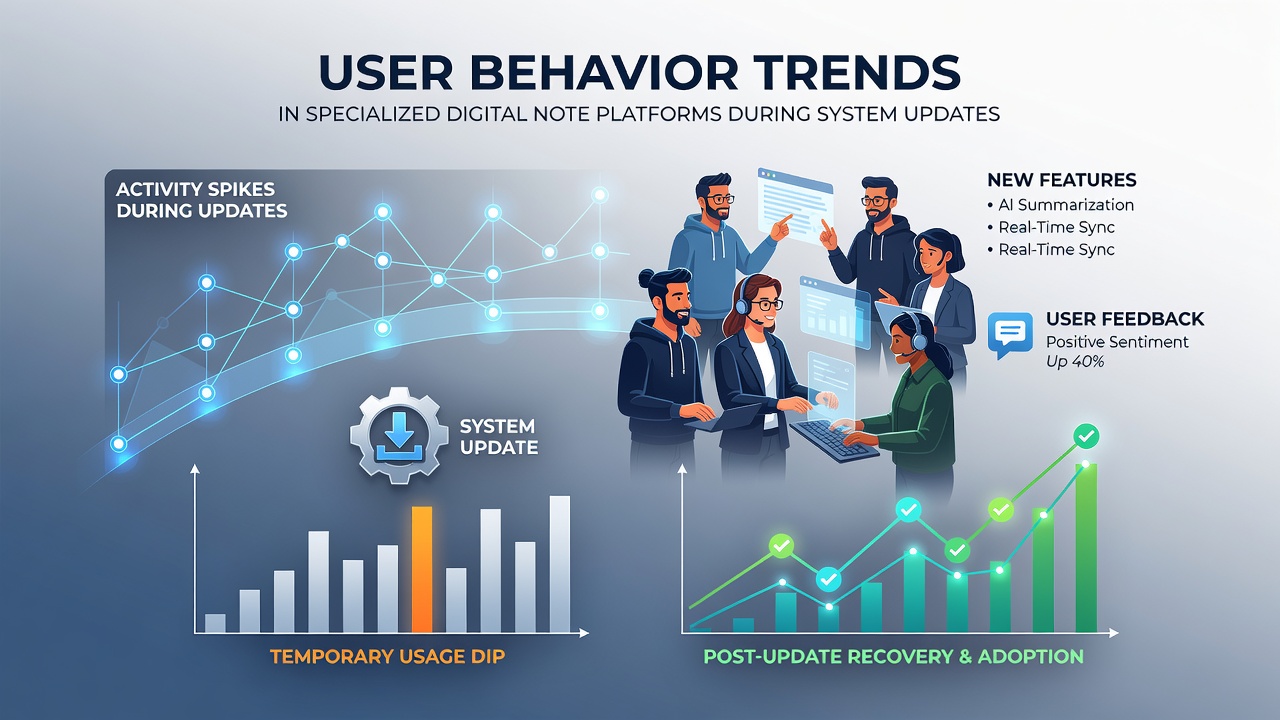
Specialized digital note platforms experience distinct shifts in user behavior when system updates roll out, with patterns emerging across engagement metrics, content migration, and feature adoption rates. Researchers tracking these platforms note that users often adjust their workflows in advance of scheduled changes, particularly when updates involve backend infrastructure modifications or interface revisions. Data from multiple industry analyses shows that September 2026 marked a period of heightened activity on several platforms, as users responded to coordinated update cycles across competing services.
Anticipatory Actions Before Updates
Users frequently begin preparing for system updates weeks ahead of deployment dates, and this preparation includes exporting notes, creating redundant backups, and testing alternative platforms for compatibility. Observers monitoring login patterns report spikes in account activity during announcement phases, while session durations on core editing features tend to shorten as people shift focus toward preservation tasks. Studies conducted by academic teams at institutions across North America indicate that these preparatory behaviors correlate with the scale of announced changes, with larger updates prompting more extensive data handling among power users who maintain large archives.
Engagement Patterns During Active Updates
During the update window itself, real-time usage data reveals temporary declines in collaborative editing sessions alongside increases in individual note viewing and search activity. Platforms that communicate timelines clearly see users cluster their interactions into specific windows, often avoiding peak hours when downtime risks appear highest. Figures from European digital economy monitoring groups highlight that mobile access rises relative to desktop during these periods, as users check progress on smaller devices while awaiting full functionality restoration. What's notable is the way search queries evolve, with terms related to migration and recovery appearing more frequently in internal help systems.
One study revealed that specialized note platforms with integrated version histories maintain steadier user retention through updates compared to those without such features, since people can verify content integrity without leaving the environment. Australian research institutions examining similar digital tools found that users who receive phased rollout notifications exhibit different pacing in their adaptation, spreading their exploration of new tools across several days rather than attempting everything immediately after completion.

Post-Update Adaptation and Feature Exploration
After updates conclude, adoption rates for newly introduced capabilities vary widely based on how platforms present them within existing workflows. Data indicates that users return to prior habits quickly when changes feel incremental, yet they invest more time in reconfiguration when structural elements like tagging systems or search algorithms receive modifications. Canadian government reports on digital service usage document that cross-platform migration attempts peak in the first two weeks following major releases, though many users return once initial friction subsides.
Those who've studied this know that support ticket volumes follow predictable curves, rising sharply in the immediate aftermath before tapering as documentation and community resources fill knowledge gaps. Platforms that maintain consistent API stability during these transitions observe fewer disruptions among third-party integrations, allowing users who rely on automation scripts to resume normal operations with minimal adjustment.
Longer-Term Shifts in Platform Loyalty
Over extended periods following system updates, retention metrics reveal that transparency around change management influences ongoing commitment levels more than the technical scope of the updates themselves. Research indicates that users who encounter unexpected data handling changes show elevated interest in export options and competing services, even when core functionality remains intact. Industry organizations tracking specialized software note that geographic differences appear in these responses, with users in regions served by multiple localized alternatives demonstrating faster platform switching behavior.
What's significant is the role of update frequency in shaping expectations, since platforms releasing smaller, more frequent changes encounter less pronounced behavioral swings than those pursuing infrequent comprehensive overhauls. Evidence from longitudinal tracking suggests that users gradually incorporate new interface elements into daily routines within four to six weeks, provided the changes align with established note-taking practices.
Conclusion
System updates on specialized digital note platforms trigger measurable sequences of user behavior that begin with preparation and extend through adaptation phases. Available data shows these patterns hold across different update sizes and communication approaches, with variations appearing mainly in the speed of return to baseline activity. Continued monitoring by research groups and regulatory bodies provides ongoing insight into how these trends evolve alongside platform development cycles.