Kai Albrecht · 4 October 2026
Analyzing Community Responses to Interface Modifications in Niche Digital Journaling Services
Digital journaling platforms that serve specialized communities have undergone repeated interface adjustments in recent years, and observers track how these groups react through forums, surveys, and usage metrics. Services focused on particular interests such as creative writing circles, mental health tracking networks, or hobby-based logging communities attract dedicated users who often voice detailed opinions when layouts shift. Data collected across multiple platforms shows that responses vary by the scale of change, the communication approach taken by developers, and the prior habits of the user base.
Common Interface Adjustments in Specialized Journaling Tools
Developers introduce modifications that range from navigation menu reorganizations to new color schemes and mobile responsiveness improvements, while some updates add collaborative features or alter data export options. Researchers examining several niche platforms note that changes implemented in late 2025 and into October 2026 frequently addressed accessibility standards and integrated new tagging systems for better content organization. These adjustments often occur after user requests accumulate on support channels, yet the implementation process itself influences how quickly communities adapt.
Platform operators monitor metrics such as session duration and feature adoption rates following each rollout, and studies indicate that visual redesigns tend to generate more immediate discussion than backend functionality tweaks. One documented pattern reveals that users in creative journaling communities respond more strongly to alterations in text input tools, whereas health-focused groups prioritize changes affecting privacy controls and notification settings.
Methods for Gathering and Interpreting Community Feedback
Administrators collect input through built-in feedback forms, external discussion boards, and aggregated analytics that track click paths and retention figures. Academic teams analyzing these datasets apply qualitative coding to categorize comments into themes like frustration with learning curves or appreciation for streamlined workflows. Government reports from bodies such as the European Commission on digital services highlight how transparency in update announcements correlates with smoother transitions in user engagement across online platforms.
Community moderators often compile response summaries that circulate within groups, and this process allows patterns to surface regarding demographic differences, with long-term members sometimes expressing stronger attachment to familiar layouts compared to newer participants. Quantitative measures from platform logs complement these narratives by showing actual shifts in posting frequency or feature exploration after modifications take effect.
Observed Patterns Across Different User Groups
Analysis of several specialized journaling services reveals that positive reactions frequently follow updates that enhance search capabilities or introduce customizable dashboards, while negative feedback clusters around unexpected removals of legacy options. Data from October 2026 rollouts indicates that services providing preview periods before full deployment experienced fewer support tickets and higher overall satisfaction scores in post-update polls. Observers note that hobby-based communities tend to organize collective responses more visibly through shared documents or petitions, whereas individual users in mental health journaling networks may express concerns privately through direct messages.

Research teams at institutions tracking digital behavior have found that age distribution within a community influences adaptation speed, with younger cohorts often adopting new elements faster while older users request additional guidance resources. These findings appear consistently across platforms serving distinct interest areas, suggesting that interface familiarity plays a central role in how modifications are received.
Factors Shaping Response Intensity and Duration
The timing of announcements relative to peak usage periods affects how broadly feedback spreads, and platforms that coordinate updates during lower-activity windows report reduced disruption. External resources such as the Statistics Canada reports on digital engagement provide context on broader trends in online community interactions that align with observations from niche journaling services. Developers who include detailed changelogs and tutorial materials alongside updates generally see shorter periods of elevated discussion before activity stabilizes.
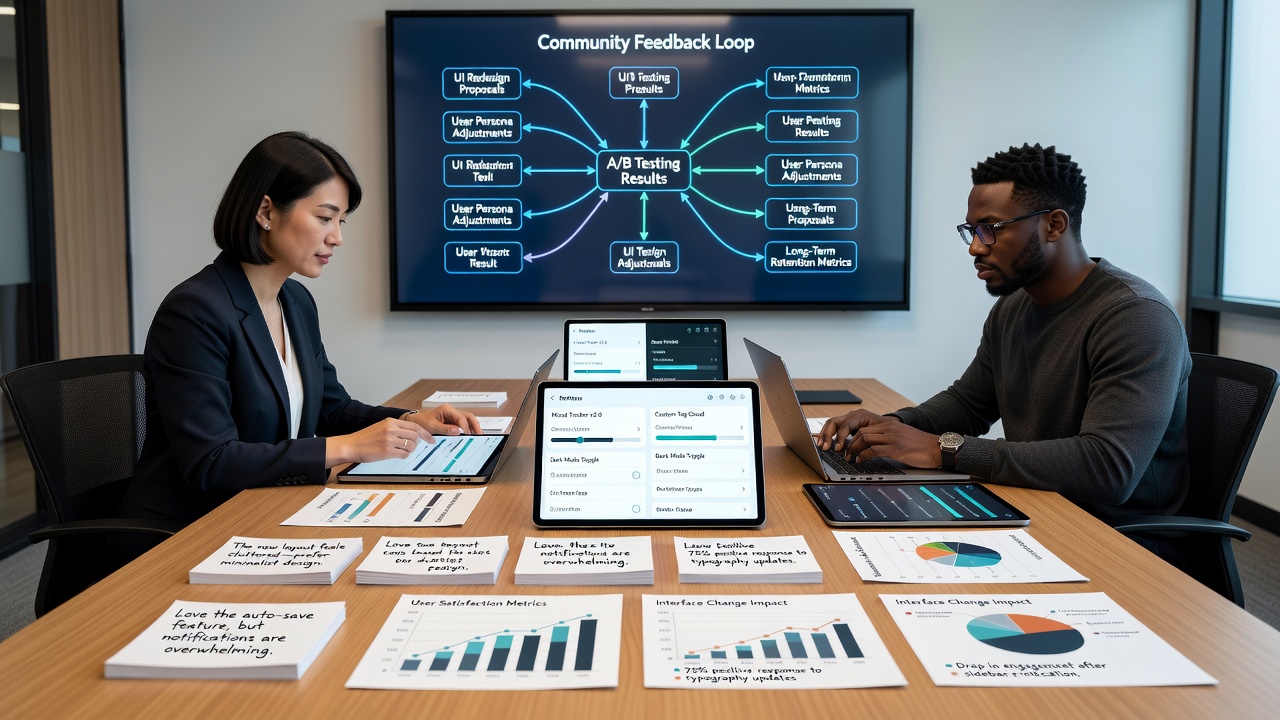
Retention data collected over multiple update cycles demonstrates that communities with established feedback loops maintain steadier participation rates even when adjustments occur. Those loops often involve regular surveys or dedicated channels that allow users to flag issues promptly, reducing the accumulation of unresolved complaints.
Conclusion
Platform operators continue to refine approaches for managing interface changes based on accumulated response data from their user bases. Patterns identified through ongoing monitoring help inform future decisions about rollout strategies and support provisions. As specialized digital journaling services evolve, the interplay between technical updates and community dynamics remains a key area for continued observation and measurement across the sector.